

Monthly Market Overview – July 2026
August 20, 2026Monthly Market Overview – July 2026
August 20, 2026NEWS
Monthly Market Overview
AUGUST 2026 IN REVIEW
ECONOMIC AND MARKET OVERVIEW
In the United States, investors’ attention remained focused on the Federal Reserve, as policymakers balanced persistent inflation against signs of slowing economic activity. Minutes released in August showed that several officials remained prepared to raise interest rates if inflation failed to moderate further. However, weaker employment and retail sales data lowered expectations of an imminent increase.
Inflation concerns in Europe intensified, as higher energy prices continued to affect the region. Financial markets continued to anticipate that the European Central Bank would raise interest rates in September amid concerns that elevated oil and natural gas prices could prolong inflationary pressures.
The UK economy continued to expand modestly, with services activity providing support, although manufacturing growth slowed. Investors remained attentive to inflation risks arising from higher energy costs and the possibility that interest rates may need to remain elevated for longer.
Economic data in the world's leading emerging market presented a mixed picture. During August, China's official manufacturing index remained below the level associated with expansion, reflecting continued pressure from weak domestic demand and the prolonged property-market downturn. At the same time, strong manufacturing output and exports, particularly in sectors such as electric vehicles, batteries and industrial equipment, caused China's trade surplus to remain near record levels. This widening imbalance between domestic demand and production has become an increasing source of concern among policymakers and trading partners globally.
Demand for semiconductors, computers and other artificial intelligence-related products supported manufacturing activity across several Asian economies, including Japan and Taiwan. This technology-driven investment cycle helped offset some of the pressure caused by higher input costs and geopolitical uncertainty.
The Japanese yen fell to a 40-year low of almost ¥164 per US dollar before Japan and the United States conducted a rarely coordinated currency intervention to support the currency. The move caused the yen to strengthen sharply, briefly appreciating to around ¥155-157 per dollar before giving back some of those gains later in the month. Reuters described the intervention as highly significant, representing only the second coordinated yen-support operation Involving the United States since 1998.
South Africa's annual consumer inflation rate declined from 5.0% in June to 4.3% in July, according to data released during August. Lower fuel prices, softer food inflation and smaller municipal tariff increases contributed to the improvement. The rand also strengthened during the month, trading near a five-month high against the US dollar as expectations of an immediate US interest-rate increase diminished.
Nevertheless, the domestic economy remained under pressure. Data released during August showed that mining, manufacturing and electricity generation had all contracted during the second quarter. Consumer spending provided limited support, with retail sales recording modest growth, while weak business activity and subdued confidence continued to constrain the broader economy. As inflation eases, investors will be watching closely to see whether the municipal elections later this year provide greater policy certainty and support a recovery in business and consumer confidence.
MARKET PERFORMANCE
Global equity markets delivered another positive month, despite ongoing uncertainty around inflation, interest rates and geopolitical developments. Developed market equities, as measured by the MSCI World Index, gained 2.6% in US dollar terms, while emerging market equities outperformed with a return of 3.4%. The US market remained a key driver of global returns, with the S&P 500 advancing 2.7% and the technology-heavy Nasdaq 100 rising 4.2%, supported by continued investor enthusiasm for artificial intelligence-related spending and strong earnings from leading technology companies.
Asian markets also benefited from the continued demand for semiconductors, computing infrastructure and other AI-related technologies. While concerns around China's domestic economy and property sector persisted, strong export growth and a near-record trade surplus helped support investor sentiment towards the broader emerging-market universe. Meanwhile, Japan remained in the spotlight as authorities intervened to support the yen following a sharp depreciation against the US dollar. On the back of a weaker yen, the Nikkei 225 gained over 3% in August.
South African financial markets performed strongly during the month. The JSE All Share Index returned 4.6%, outperforming most major developed market indices. The combination of easing inflation, a stronger rand and generally favourable global market conditions contributed to improved investor sentiment. South African bonds also produced a positive return of 0.7%, while cash returned 0.6% during the month. Listed property was the notable exception, declining 5.5% and giving back some of the strong gains recorded earlier in the year.
Among the major asset classes, gold was one of the standout performers, rising 9.4% in US dollar terms during August. The strong performance reflected continued demand for defensive assets amid geopolitical uncertainty and concerns about the future path of inflation and interest rates. Oil prices were relatively stable, gaining only 0.4% during the month. Overall, August provided another reminder that, despite ongoing economic and political uncertainty, diversified investors continued to be rewarded across a broad range of asset classes.

INVESTOR EDUCATION
How passive are index funds?
“…index funds are a ‘cop-out’ and a fad that will soon disappear…” - Financial Analysts Journal, Volume 32, edition 6, Nov/Dec 1976

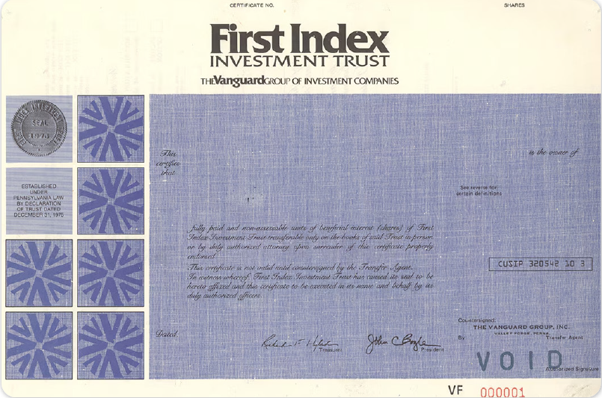
Fifty years ago this month, the launch of the Vanguard First Index Investment Trust did not go as planned. Jack Bogle, Vanguard’s founder, later described it as “an abject failure”. He had hoped to raise between USD 50 million and USD 150 million but attracted only a little more than USD 11 million — about USD 65 million in today’s money. Even so, as the first fund available to individual investors that set out simply to track a stock market index — America’s S&P 500 — it was controversial from the start. An article in the Financial Analysts Journal, published later that year, noted that index funds were often dismissed as a “cop-out” and a passing fad.
Index funds are often described as "passive" because they aim to track a market index rather than select individual securities. Yet every index fund requires an active decision before an investor buys it. Which index should you track? The S&P 500? The Nasdaq 100? The MSCI World Index? A South African equity index? Each choice creates a different portfolio and leads to different outcomes.
Even within index funds, active decisions abound. Index providers decide which companies are included, how they are weighted, and when changes should be made. Fund managers determine how to minimise trading costs, manage cash flows and implement index changes efficiently.
Perhaps most surprising is that index funds increasingly influence market outcomes themselves. Several academic studies suggest that money flowing into index funds can
disproportionately benefit the largest companies in an index, helping to reinforce their dominance. In other words, index funds do not simply reflect markets; they may also help shape them.
None of this diminishes the value of index funds. Their combination of diversification, simplicity and low costs has made them one of the most successful financial innovations of the past fifty years. However, the idea that investing can be completely passive is something of a myth. Every portfolio represents a set of decisions, whether made by an investment manager, an index provider or the investor themselves.
The lesson? There is no escaping the need for thoughtful portfolio construction. The real question is not whether a portfolio is active or passive, but whether the decisions behind it are sensible, transparent and aligned with an investor's objectives.
Sources: The Economist, August 2026. Financial Analysts Journal, Nov/Dec 1976
Disclaimer
The information provided is of a general nature only and does not take into account investor’s objectives, financial situations or needs. The information does not constitute financial product advice and it should not be used, relied upon or treated as a substitute for specific, professional advice. It is, therefore, recommended that investors obtain the appropriate legal, tax, investment and/or other professional advice and formulate an investment strategy that would suit the investor’s risk profile prior to acting on such information and to consider whether any recommendation is appropriate considering the investor’s own objectives and particular needs. Although the information provided and statements of fact are obtained from sources that Analytics Consulting considers reliable, we do not guarantee their accuracy, completeness or currency and any such information may be incomplete or condensed. No guarantee of investment performance should be inferred from any of the information contained in this document. Collective Investment Schemes in Securities (“CIS”) are generally medium to long term investments. The value of participatory interests may go down as well as up and past performance is not necessarily a guide to future performance.
Any opinions, statements and information made available, whether written, oral or implied are expressed in good faith. Views are subject to change, without prior notice, on the basis of additional or new research, new facts or developments. All data is in base currency terms unless otherwise indicated, and sourced as disclosed.